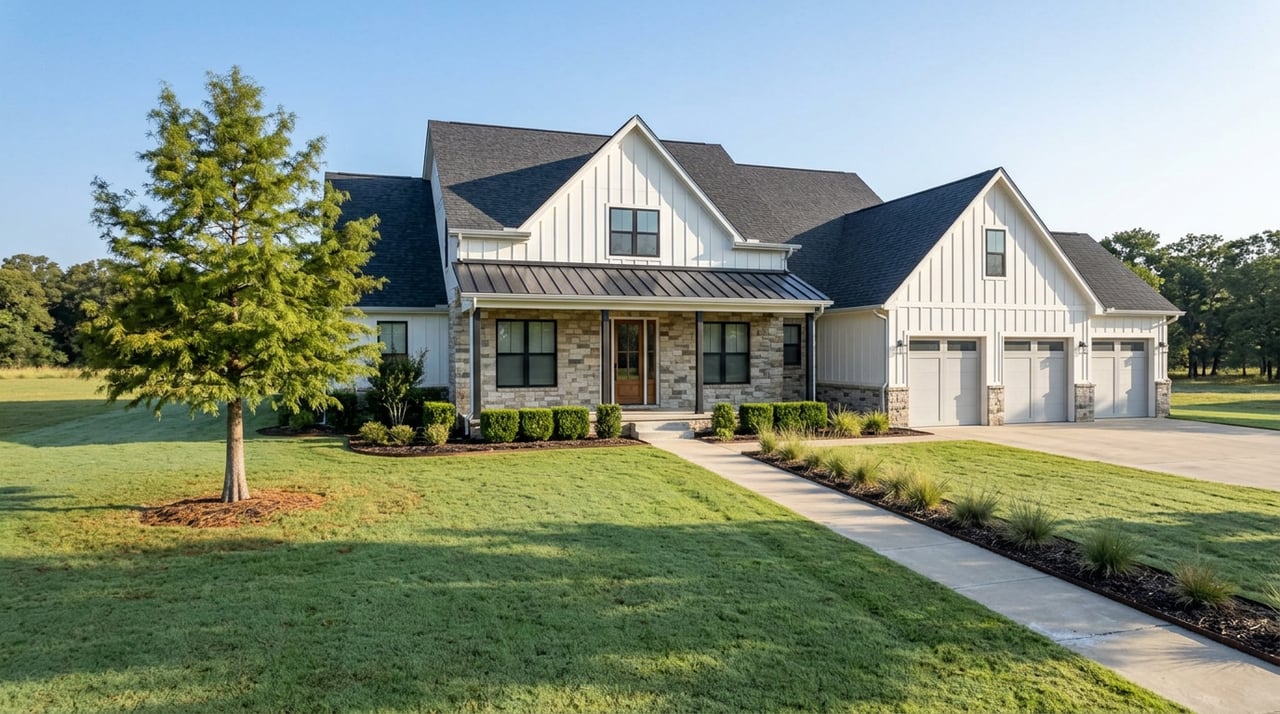
Four Sites, Four Different Glenpool Home Prices. Only One Number Actually Matters.
Search "Glenpool home prices" this week and you will land on a genuine contradiction. One market tracker says homes sold for a median of $286,495 over the past year, up 16.9 percent. A national aggregator's trailing twelve-month figure puts the median sale price at $402,900, a 27 percent jump. A third site's median list price sits at $365,000, essentially flat versus a year ago. A fourth, tracking only what is actively for sale right now, pegs the average asking price at $411,665. These are not typos. They are not competing agendas. They are four different snapshots of a market small enough that a single month's closings can swing the headline number by tens of thousands of dollars.
That volatility is not a data problem to wait out. It is the actual story of what Glenpool has become, and it changes how you should read any price you see attached to this city.
Here is what a buyer comparing Glenpool to Jenks or Bixby actually finds when they check multiple sources in the same week:
| Source snapshot | Time window | Reported figure | Year-over-year direction |
|---|---|---|---|
| Seller-focused market tracker | May 2026 | Median sale price $286,495 | Up 16.9% |
| National listing aggregator | Trailing 12 months, reported 2026 | Median sale price $402,900 | Up 27% |
| Listing-price tracker | July 2026 | Median list price $365,000 | Roughly flat |
| Active-inventory feed | August 2026 | Average asking price $411,665 | Not reported |
Every one of these numbers is technically accurate for what it measures. The problem is that "what it measures" keeps changing. Some report median sale price, some report median list price, some track only homes still sitting on the market, some average a full trailing year and some snapshot the most recent month. In a city with somewhere between 100 and 130 homes on the market at any given time, that distinction matters enormously. Sell three $600,000 new builds in Carson Trails during the same month that five $150,000 Old Town resales close, and your median jumps or crashes depending purely on which handful of transactions happened to close that month. This is not how price data behaves in a market the size of Tulsa or even Broken Arrow, where enough volume smooths out the noise. In Glenpool, the noise is the signal.
The two sale-price sources point the same direction, up, even while disagreeing by more than ten percentage points on how fast. That disagreement over pace, not direction, is worth understanding before you treat any single number as gospel.
The real explanation for the swinging median is not measurement error. It is that Glenpool is not one housing market. It is at least three, stacked inside a single city limit, and each one prices completely differently.
The Old Town core, built up mostly from the 1950s through the 1980s on tree-shaded residential blocks, is where you find one-story brick homes trading in the $90,000 to $230,000 range. These are the starter homes and the downsizing stock, and they are the segment most likely to pull a monthly median down when several close at once.
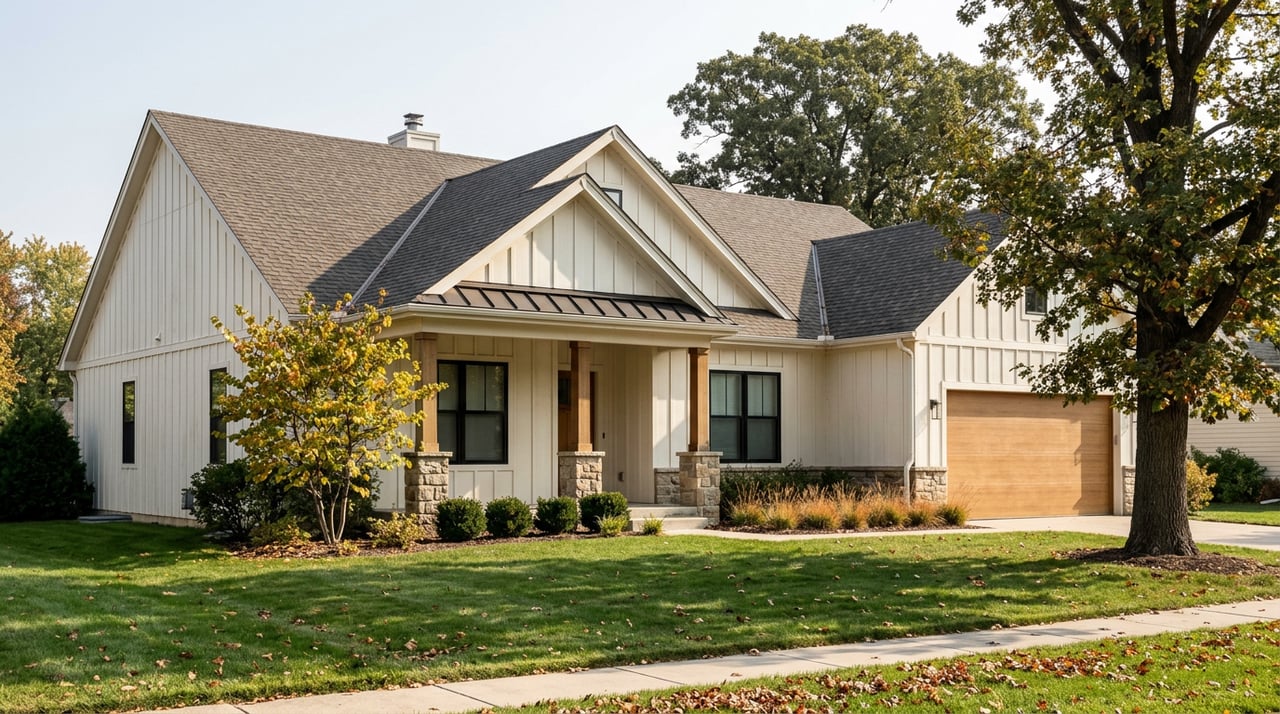
Then there is the newer subdivision wave, sidewalks and traditional Craftsman styling, built from the 1990s through today. The city's own planning records show how much of this is still coming online. Carson Trails, a 497-lot planned development sited near West 181st Street and South Union Avenue, cleared its Phase I plat earlier this year. Scissortail Phase 2 subdivided roughly 40 acres into 111 new residential lots. Add Redbud Glen, Elwood Meadows, and the Cottages at Taylors Pond, and you have a steady pipeline of new construction that prices well above the Old Town stock and pulls the median up whenever a cluster of those closings lands in the same reporting month.
The third segment is geographic rather than architectural, with distinct pockets: the northern edge of Glenpool, closest to Jenks and South Tulsa, sits near the Oklahoma Aquarium and the Riverwalk Crossing corridor. Homeowners here are effectively buying proximity to South Tulsa's commercial amenities while paying Glenpool prices instead of Jenks prices. Within this geographic segment, a pocket on the city's east side, near the Creek Turnpike interchange, trades instead on quick highway access toward Broken Arrow and Bixby rather than proximity to Jenks. In Homes.com's Glenpool guide, Mayor Joyce Calvert describes the turnover happening in the Old Town area where she lives and says new homes are going up "for different price points," including a gated community forming on the south end of the city.
Three markets, one zip code, and a median that reflects whichever one happened to transact most heavily last month. That is not a flaw in the data. It is Glenpool's actual structure.
The comparison that matters most for anyone shopping the south Tulsa metro is not Glenpool against itself across different reporting windows. It is Glenpool against its neighbors. Local renovation cost breakdowns from this year place average home values at roughly $361,000 in Jenks and around $325,000 in Bixby, while Glenpool's broader base sits closer to $240,000 to $250,000. That gap is the actual value proposition, not the headline percentage swing. A buyer priced out of Jenks by $100,000 or more can often find a comparable square footage and a comparable commute time on Glenpool's north side, provided they understand they are buying into the segment of Glenpool that behaves most like Jenks, not the Old Town segment three miles south that behaves nothing like it.
This is also why appreciation percentages need context. A 17 percent year-over-year gain sounds dramatic until you remember it is measured off a smaller base than Jenks or Bixby. Percentage moves compress on a lower starting price. The dollar gap to Glenpool's pricier neighbors has been narrowing, but it has not closed, and treating a headline appreciation rate as proof that Glenpool now costs what Jenks costs would be a mistake a careful comparison shopper should catch.
If you are pricing a purchase or a listing in Glenpool right now, the single median number on any portal is close to useless on its own. What actually tells you something:
None of this requires distrusting the data you find online. It requires reading it as what it is: a partial snapshot of a market that is genuinely three markets, and treating the headline percentage as a starting question rather than a finished answer.
Is Glenpool actually cheaper than Jenks and Bixby right now? Yes, on a citywide basis. The broader Glenpool market runs roughly $110,000 to $120,000 below Jenks and roughly $75,000 to $85,000 below Bixby, based on a Tulsa-area renovation contractor's market cost comparison published this year. That gap narrows if you are specifically comparing new construction on Glenpool's north side to comparable Jenks inventory.
Why did one site put the median sale price near $286,000 while another put it above $400,000 in the same year? Different measurement windows and different price types. One reflects a single recent snapshot of closed sales, another averages a full trailing twelve months, and a small market like Glenpool can produce very different medians from each depending on which handful of homes closed when and at what price point.
What should I actually trust when I'm ready to price a home here? A comp pulled from the specific subdivision and build era you're targeting, checked against actual closed sale prices rather than list prices, will tell you far more than any citywide median. That is the kind of pricing conversation worth having before you list or make an offer.
Glenpool's price story is not a single number moving up or down. It is three markets moving at three different speeds inside one city limit, and knowing which one you are actually standing in is what separates a confident offer from a guess.
If you are trying to figure out which of Glenpool's price segments your next move actually falls into, or you want a straight read on what a specific address is worth before you list it, Jill Falkenberry has spent close to three decades pricing homes across the Tulsa area with exactly this kind of neighborhood-by-neighborhood detail. You can also start with a home valuation to see where your property sits before you rely on a citywide average. Let's Connect.
Stay up to date on the latest real estate trends.
Jill brings to her clients a true sense of friendship, because after all, finding a new home is a huge decision, and having someone at your side and ON your side to help you look at your situation objectively is essential